
Project Tomorrow Review: A $6 Base Defense Game
Our Project Tomorrow review covers the terraforming loop, wave defense, Early Access content, performance and whether the $5.94 launch price is worth it.
Project Tomorrow is a base-building survival game about terraforming a poisoned Earth and defending the machines that bring it back. It launched into Early Access on November 9, 2026 for $5.94, with three regions, 20 buildings, 75 items and 20 modifiers. Source: Project Tomorrow on Steam ↗
Project Tomorrow does not hide what it is. You wake up on a dead planet, place a windmill, build an oxygen emitter, and watch a beam cut through purple wasteland until a patch of green appears. Then a wave of alien insects arrives to smash the machine you just built. That loop, repeated with more buildings and bigger waves, is the entire game. At $5.94 it is also one of the more honest purchases on Steam this month.
This review is based on the public demo, the launch build's Steam metadata, the developer's patch notes and the first day of player reviews. It is an Early Access game released one day ago, so treat every judgement as provisional. The store page itself says more regions, buildings, enemies and mechanics are planned.
What Project Tomorrow actually is
The genre label says strategy, but the moment-to-moment game is closer to a compact base builder with tower defense waves. You control a character in third person, gather Cobalt, Iron, Silicone, Copper and Magnetite, and spend those materials inside a build radius projected by your windmills. Every building needs power. Every action you take, including gathering, pushes a visible countdown toward the next attack.
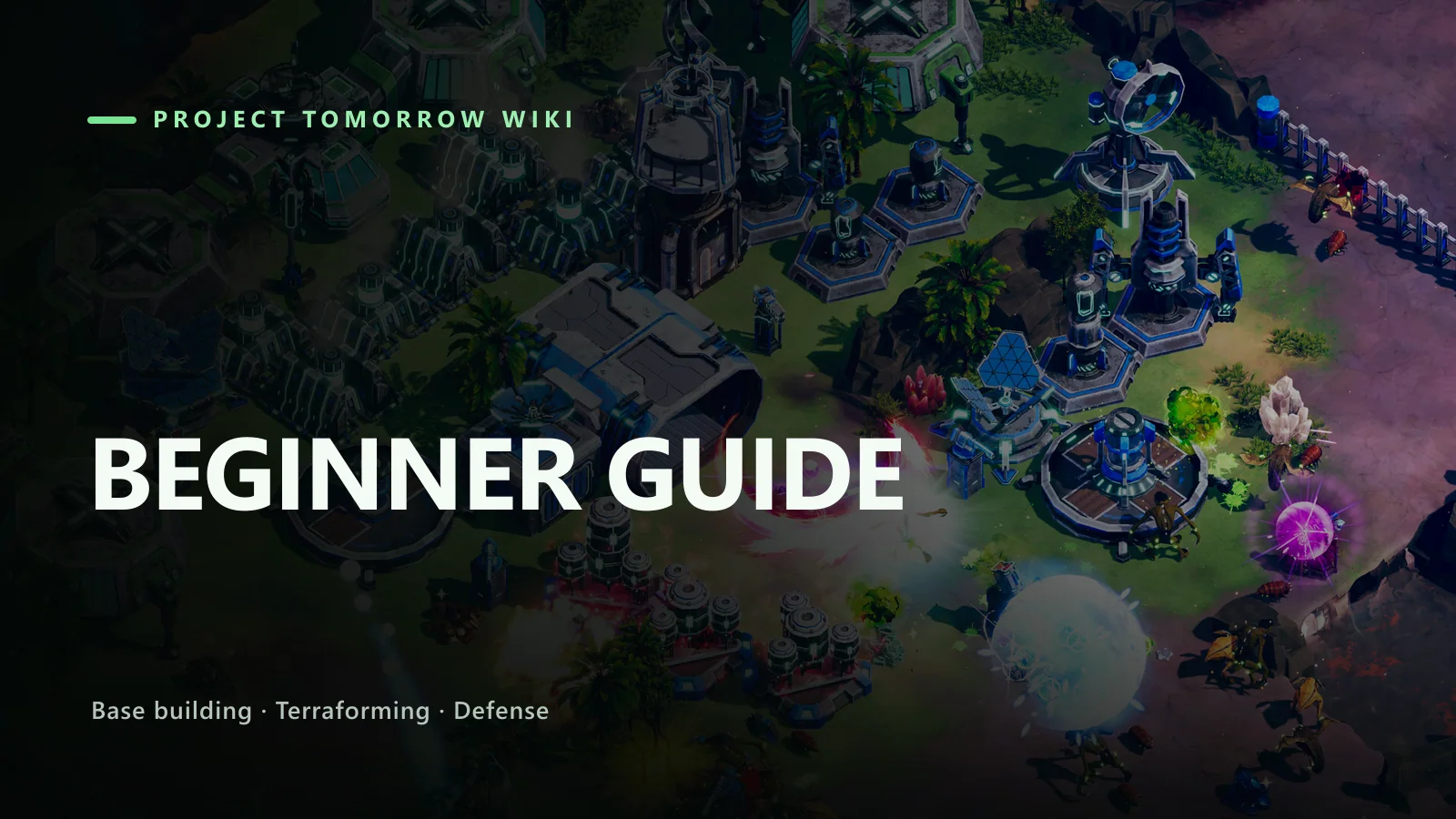
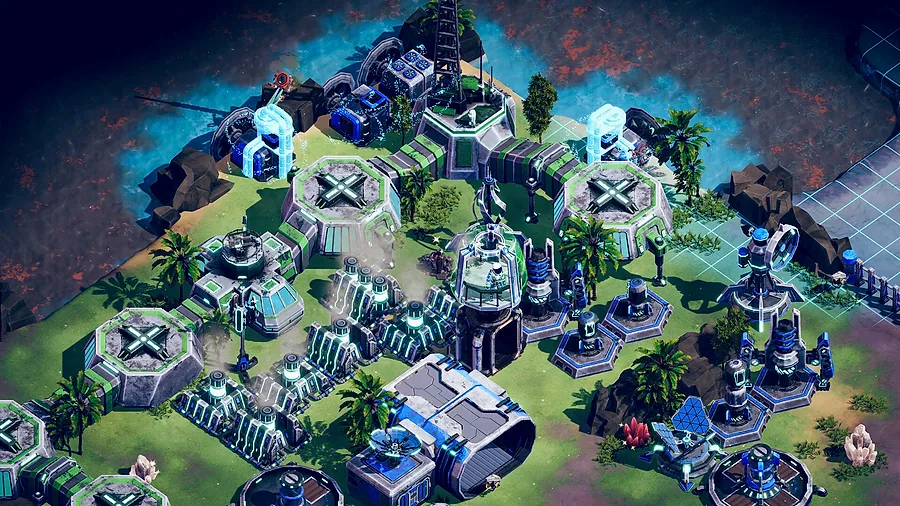
Terraforming is the twist. Instead of watching a planet meter fill over time, you build Oxygen Emitters, Hydro Infusers and Thermal Drills, keep them alive through attacks, and upgrade them. Each machine contributes to the local environment and to your base's Water, Oxygen and Heat pools. Green ground spreads around the machines. The visual feedback is immediate, which matters more than the simulation depth: you can see the planet recovering in front of you.
The defense layer is conventional but well matched to the fantasy. Bugs come from one or more directions, break walls, and target your base and terraformers. You build Pulse Turrets, Gauss Cannons, Interceptors and Nova Mortars, add walls and gates, and enter a Watchtower yourself when a wave needs direct fire. Between waves you repair, expand and choose whether to spend Upgrade Cores on economy or defense.
The launch content, in numbers
The developer's October 6 announcement laid out the Early Access scope: three complete regions, 20 buildings, 75 items, 18 enemy types and 20 modifiers. That is a small-to-mid-sized game, not a 100-hour factory sim. The three regions are Suncrest, Tidehaven and Winterbloom, and each introduces a mechanic rather than just a palette swap:
- Suncrest is the tutorial region: one attack direction, generous oxygen, and enough quests to teach building, terraforming and combat.
- Tidehaven is the volcanic region that turns into a tropical oasis. It adds automation through the Resource Hub and mining drones, food and water production, flying enemies, and two new turret answers.
- Winterbloom is the late-game snow region, with heavy Guardians, new modifiers and the strongest defensive tools.
There are 10 achievements, including one for restoring each region and a 0.1% achievement for building ten of each terraforming machine in a single region. The achievement design confirms what the game wants you to do: finish the campaign, then replay regions with modifiers and push the terraforming system further than the story requires.
What the demo did well
The first hour is the strongest part. The game gives you a clear task, a clear threat direction and a visible timer. You learn that oxygen drains outside the green zone, that the windmill defines where you can build, and that the oxygen emitter is both an economy building and a defensive objective. When the first wave hits, you already understand what you are protecting.
The build feedback is better than the price suggests. Terraforming beams are visible from across the map, damaged walls show their state, and the ground colour changes as the environment recovers. The CRAFT screen is readable, with large item tiles and a resource strip at the top. Housing Frames list their exact costs rather than hiding them behind a tooltip.
The modifier system is the cleverest addition. Challenges make a region harder; Buffs give you an advantage; you can mix both. More Challenges raise the region score ceiling, so the system is not just a difficulty slider. It gives replay value to a campaign that is otherwise only three regions long.
Where it is rough
This is a solo-developed Early Access game, and it shows in places that are not about graphics. The tutorial is quest-driven but not always explicit about why a system matters. The camera takes time to learn. The build radius rule is explained once and then assumed. Players who skip the quest text will place buildings they cannot power and wonder why nothing works.
The combat is functional rather than spectacular. Your character has a Pulse Pistol and a melee option, but the real damage comes from turrets and positioning. If you want a twin-stick shooter, this is not it. If you want to stand in a Watchtower and pick off stragglers while your walls hold, it is exactly that.
The store page lists minimum requirements but no recommended tier, and Steam Deck status is not verified. The launch-day review count is small, so the 4.0 score is a signal, not a verdict. Early Access also means the balance you learn this week may change.
Who should buy it now
Buy Project Tomorrow now if you enjoyed the demo, if you like base defense games with a visible economy, or if you want a short, cheap campaign you can finish in a weekend and replay with modifiers. The three-region structure is honest about its length, and the terraforming loop is different enough from the usual survival craft to justify an evening.
Wait if you need a polished campaign, a long progression tree, or verified Steam Deck performance. Wait if you bounce off tutorial quests that explain the what but not the why. And wait if you are looking for a pure automation game: the Resource Hub and drones arrive in the second region, but this is still a defense game first.
How it compares with Planet Crafter and Riftbreaker
The obvious comparison is The Planet Crafter, which is about terraforming a planet over a long horizon with almost no combat. Project Tomorrow is shorter, cheaper, and puts a wave timer on every action. It is less relaxing and more urgent. The other comparison is The Riftbreaker: base building, waves, and a character who fights alongside turrets. Project Tomorrow has a smaller budget and a smaller content pool, but the terraforming beam gives it a distinct identity.
If you want the long, meditative terraforming project, Planet Crafter is still the better game. If you want a $6 version with walls, waves and a visible green line spreading across the map, Project Tomorrow is the more interesting bet.
Verdict
Project Tomorrow is a good small game with a clear idea. The terraforming machines are not decoration; they are the reason the base exists, the reason the waves come, and the reason the map changes. The defense layer supports that idea instead of competing with it. At launch, the content is limited and the rough edges are real, but the price is low and the loop is already legible.
Score: 7.5/10 for the launch build. Worth it now for base-defense fans and demo players; worth wishlisting for everyone else until the first content patch lands.
If you are buying it, start with the beginner guide→ before your first wave, and check the system requirements→ if you are on integrated graphics.
FAQ
Is Project Tomorrow worth $5.94?
Yes if you like base building and wave defense and want a short campaign. The launch build has three regions and a clear terraforming loop. It is not worth full price expectations of a finished strategy game.
How long is Project Tomorrow?
The developer has not published a completion time. The demo's first region took roughly an hour for a new player, and the launch build has three regions plus modifier replays. Expect a short campaign rather than dozens of hours.
Is Project Tomorrow multiplayer?
No. The Steam page lists single-player only. There is no co-op or PvP mode.
Is Project Tomorrow on Steam Deck?
It is not Steam Deck Verified at launch. The minimum GPU is an Intel HD 4600, so the game is light, but verify performance on your own device before relying on it.
Sources
- Project Tomorrow on Steam ↗
- Project Tomorrow Steam news and patch notes ↗
- Project Tomorrow achievements ↗
- Advance Nine developer links ↗
Official source: Project Tomorrow on Steam ↗ Project Tomorrow guides and walkthroughs